Microbiology grad student honored for outreach efforts
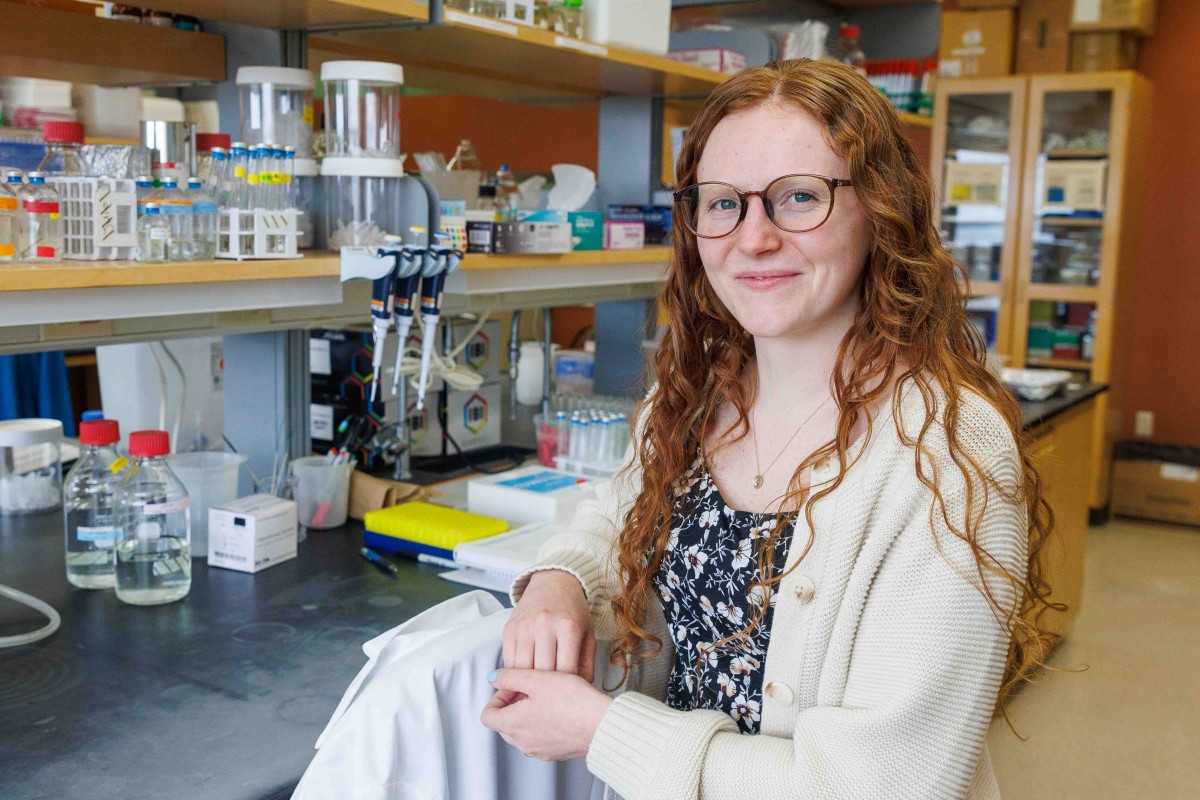
As a graduate researcher at the University of Wisconsin–Madison, Sydney Bradley studies microbiology in pursuit of better biofuels. But she’s not just interested in publishing her findings in scientific journals.
Bradley integrates her passion for art, design, and education to make science accessible to a broader audience.
She has presented her research to middle and high school students at numerous Jr. Science Cafe events, co-hosted a booth at the Madison Night Market to engage with community members and government officials, and she continues to emcee "Microbiology on Tap" events, bringing the local science community together over a beer. This year, Bradley organized volunteers to join her and chat about microbiology and the GLBRC’s sustainability mission at the Madison Children’s Museum Adult Swim night.
An important part of my work is accepting — and wanting to encounter — failures. Kids are still very open to this, because they realize that putting their shoe on the wrong foot isn't a big deal.
Sydney Bradley
“I really believe that outreach is about making science — and what people often think are complicated topics — more accessible and inviting,” she said.
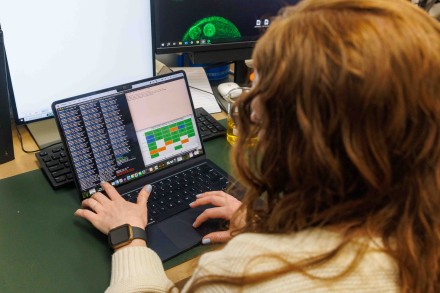
In recognition of her contributions to science education, Bradley is the recipient of the Great Lakes Bioenergy Research Center’s 2026 Education and Outreach Award.
“She has devoted considerable time to outreach, which seems to stem from her own motivation to seek out opportunities rather than merely accepting invitations to participate,” said Allison Yim, Education and Outreach Director for the Wisconsin Energy Institute. “That really stands out.”
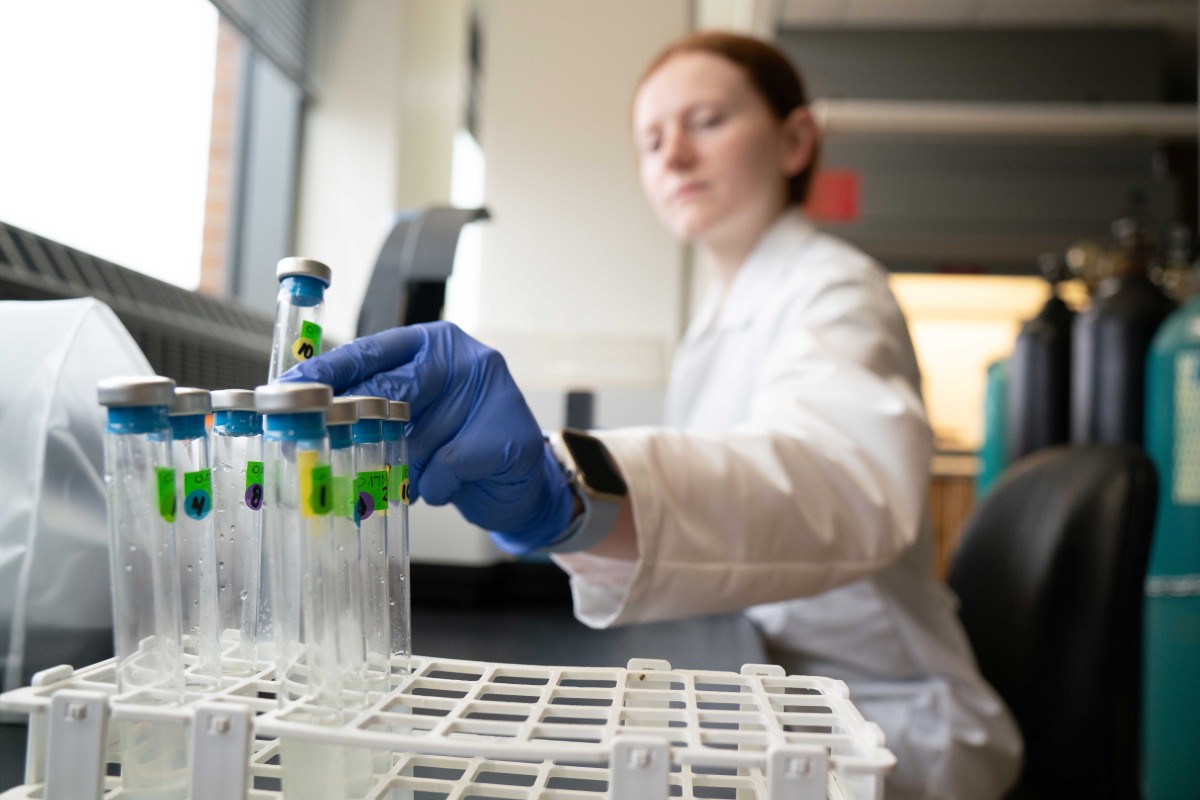
A third-year PhD student in the lab of Daniel Amador-Noguez, Bradley uses adaptive laboratory evolution, driven by natural selection, to breed bacteria that are more resistant to isobutanol over time. Isobutanol is an alcohol that has advantages over ethanol in biofuel applications, but can be toxic to the microbes that produce it.
Through her outreach efforts, Bradley talks with individuals of all ages, including state and local officials, about the importance of biofuels such as isobutanol, which can be converted into sustainable jet fuel.
“An important part of my work is accepting — and wanting to encounter — failures,” she said. “Kids are still very open to this, because they realize that putting their shoe on the wrong foot isn't a big deal. It's just a minor inconvenience of their day; they move on. And so, I believe they possess greater resiliency to try something new, or attempt it for the fifth time!”
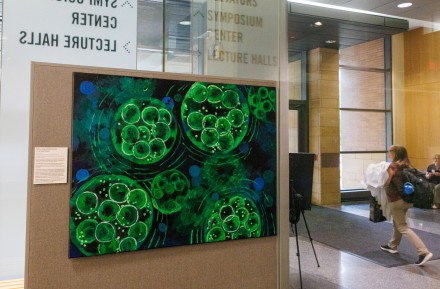
In addition to her research, Bradley is currently revamping a small gallery in the lobby of the Microbial Sciences Building to showcase art that reflects the extensive work being done in the labs above. She strives to highlight the interconnectedness of science and art in ways that rekindle curiosity, creativity, and a sense of wonder in academic spaces.
“I hope to make science more beautiful and keep it colorful,” she said. “I strive to make it approachable in a visual sense, often including hands-on and tactile elements.”
Earlier this year, the Wisconsin Institute for Discovery selected Bradley for its Kohler Fellowship, which seeks to bridge science and the humanities by pairing UW–Madison graduate students from diverse disciplines to collaborate on innovative research, public engagement, and creative exploration.
Bradley's goal is to involve everyone in the conversation while helping them understand the center’s mission: to conduct research that enables cost-effective production of fuels and chemicals from non-food plants grown on land unsuitable for food.
Bradley says she finds inspiration in the children she meets at these events, admiring their capacity to grasp scientific concepts and their unrestrained curiosity. Unlike adults, are less concerned about being wrong, which allows their questions to guide the conversation and foster further learning.
Bradley is working with R.J. Maupin, a stained-glass artist and PhD candidate researching the history of American glass production and the public performance of glassblowing across industrial and studio contexts.
They aim to create art that “sparks conversations surrounding sustainable energy and highlights the many steps, people, and decisions involved in building sustainable energy systems.”
Bradley hopes the fellowship will lead to a museum residency where she can actively engage people in discussions about science.
“We want anyone, of any age, to be able to experience the wonders of the research taking place,” Bradley said. “I believe that if science is presented in artistic, colorful, or hands-on ways, people feel less limited by their background knowledge and more willing to engage with unfamiliar ideas.”