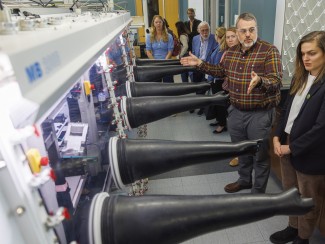
The DOE Under Secretary for Science Darío Gil took part in a daylong visit that emphasized UW–Madison’s strengths across a number of research areas, as well as key public-private partnerships that advanced the Wisconsin Idea.
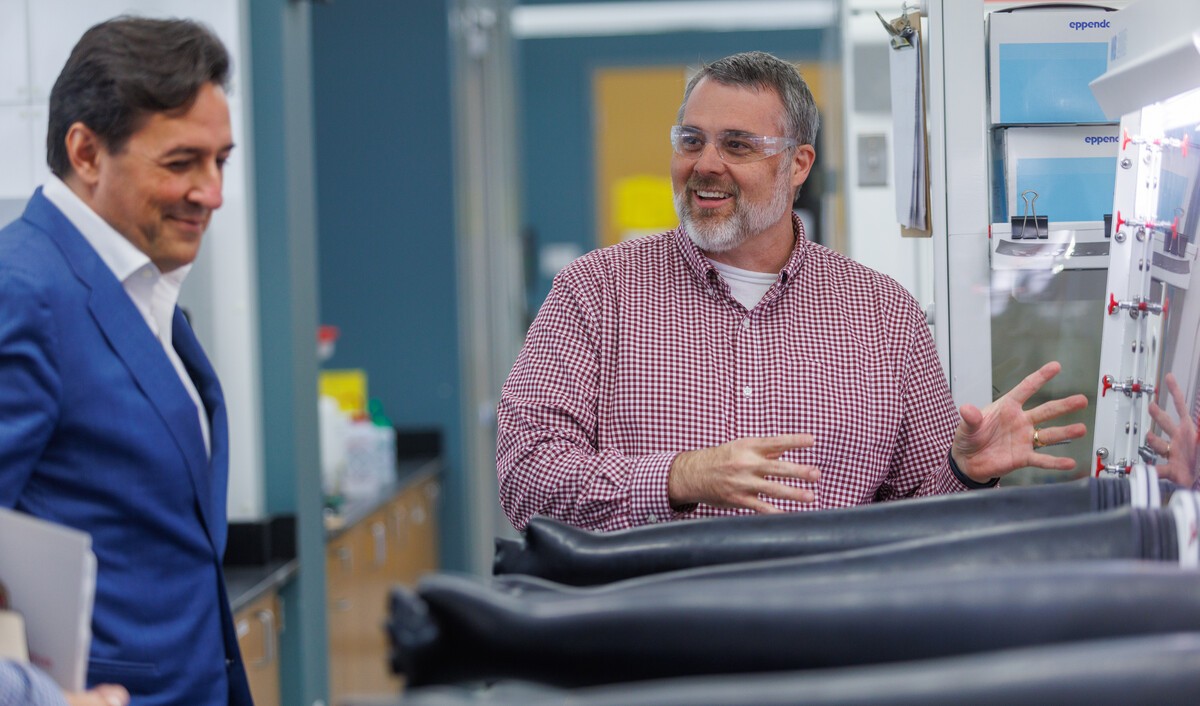
The Wisconsin Energy Institute hosted a top official from the U.S. Department of Energy Monday during a visit focused on the University of Wisconsin–Madison's strengths in research areas including quantum science, fusion energy, critical minerals, and biotechnology.
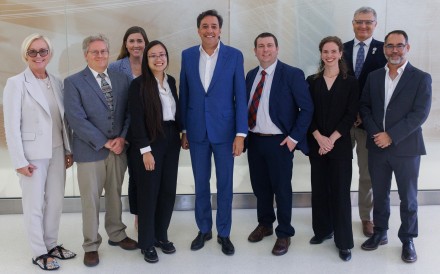
DOE Under Secretary for Science Darío Gil met with researchers from across campus and local tech industries during the daylong visit hosted by UW–Madison Vice Chancellor for Research Dorota Brzezinska.
The tour provided Gil a firsthand chance to learn about UW–Madison’s research enterprise and alignment with DOE priorities. Discussions focused on opportunities to strengthen public-private partnerships, accelerate technology commercialization, expand workforce development and better position Wisconsin as a well-coordinated innovation ecosystem.
The visit also examined the growing role of artificial intelligence in research and education.
“Everything about the classroom has changed because of AI,” Remzi Arpaci-Dusseau, founding dean of the College of Computing & Artificial Intelligence, explained during the visit.
Other participants in the visit included leaders from the Wisconsin Quantum Institute, Data Science Institute, College of Engineering and College of Letters & Science, as well as the Wisconsin Alumni Research Foundation, Sandia National Laboratories, Wisconsin Quantum Alliance, Wisconsin Economic Development Corporation, Wisconsin Technology Council, and the UW–Madison spinoffs Realta Fusion, SHINE, and Type One Energy.

“In Wisconsin, we are taking ‘Eureka!’ moments and bringing them to life,” Realta Fusion CEO Kieran Furlong said.
A national leader in the Genesis Mission
Among the major focus areas of the visit was UW–Madison’s participation in DOE’s Genesis Mission. The university recently received five Genesis Mission Round 1 awards, supporting projects in AI, fusion energy, critical mineral recovery and advanced computing. UW–Madison earned more Genesis awards than any public university in the nation, tying Stanford University and trailing only the Massachusetts Institute of Technology.
Gil encouraged participants to “become an integral part of the (Genesis) platform,” emphasizing the importance of aligning institutional strengths with national scientific priorities.
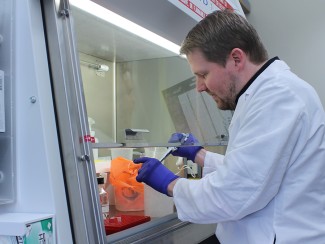
Gil also toured the university’s Proteus autonomous laboratory at the Wisconsin Energy Institute, and other major biotechnology facilities, including the Great Lakes Bioenergy Research Center and the Wisconsin Crop Innovation Center. He heard from scientists about how automation, genomics, plant science and bioengineering are accelerating the development of sustainable biofuels, renewable chemicals and other biobased products.
Participants also emphasized the university’s longstanding leadership in DOE-supported bioenergy research.
Another session during the visit brought together early-career faculty, graduate students and postdoctoral researchers from disciplines including chemical engineering, quantum computing, materials science, nuclear engineering and computer science. The conversation explored the role of federal research investments and how emerging researchers are using AI, machine learning and advanced computational tools to address challenges.
“As faculty, we think a lot about how AI has changed our responsibility and role in training students to go out into the world,” said Rose Cersonsky, UW–Madison chemical and biological engineering professor and one of two DOE Office of Science Early Career Research Program awardees at UW–Madison in attendance. (The other was Siddarth Krishna, professor in the Department of Chemical and Biological Engineering.)
Bold approaches to the frontier sciences
Finally, a fusion energy roundtable highlighted Wisconsin’s vision for building a fusion innovation hub rooted in the university’s longstanding expertise in plasma physics and projects such as WHAM, a prototype plasma fusion device that operates in partnership with Realta. Participants emphasized collaboration among universities, industry, government agencies and national laboratories to accelerate the development of next-generation energy technologies.
Throughout the visit, Gil challenged participants to think boldly about where their research could be in a year, building on Wisconsin’s current strengths in the frontier sciences — those cutting-edge, emerging, and highly interdisciplinary fields of research that sit at the boundaries of current human knowledge and technological capability.
“This is not just about university growth,” said Brzezinska, emphasizing the impact of this work on people in Wisconsin and beyond. “It is about leveraging partnerships to build an ecosystem across the state, region and country for translation, evolving the supply chain, workforce development and manufacturing.”
A version of this story was originally published by the UW–Madison Office of the Vice Chancellor for Research.