Tool for bacterial gene overexpression could enable breakthroughs in medicine, bioproducts
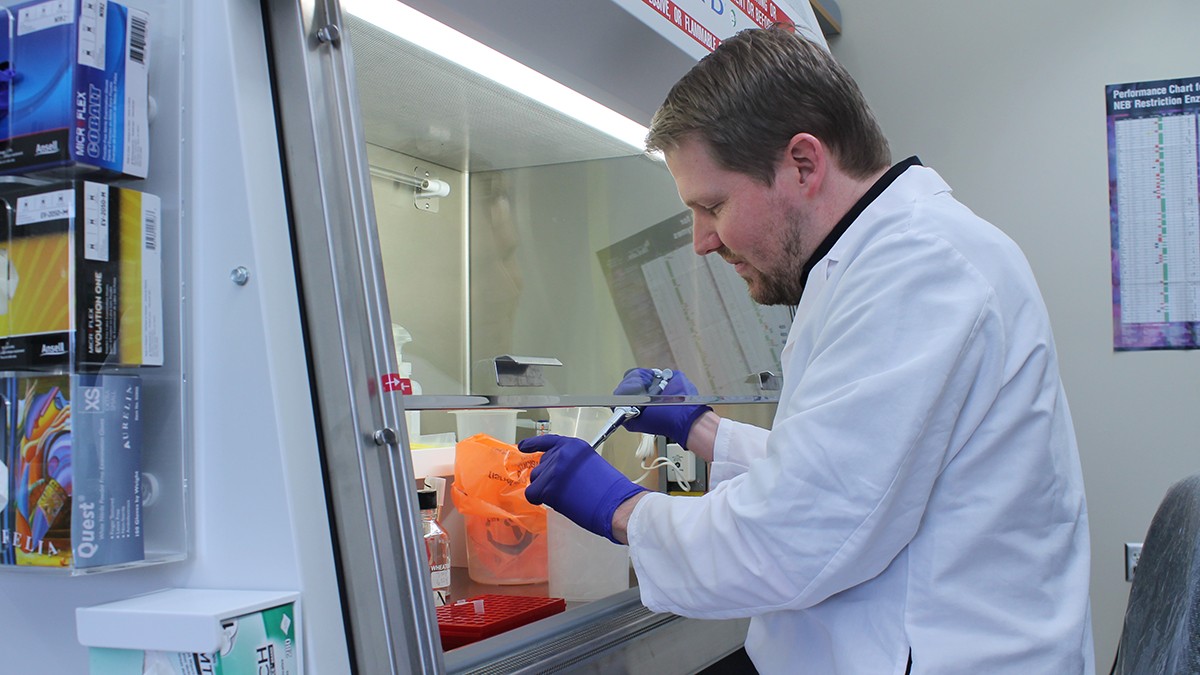
A team of scientists from the University of Wisconsin–Madison has developed a tool that researchers can use to better understand bacteria and their genes in the pursuit of better antibiotic drugs and microbes used in bioproduct manufacturing.
Adapted from the gene editing technique known as CRISPR, this new tool, called CRISPRtOE, can be used to easily and selectively boost the activity of selected genes in bacteria, an approach that was previously laborious and time consuming.
That could provide new insights into genes that contribute to antibiotic resistance in pathogenic bacteria or that help microbes produce more biofuels and bioproducts by mitigating the effects of plant toxins.
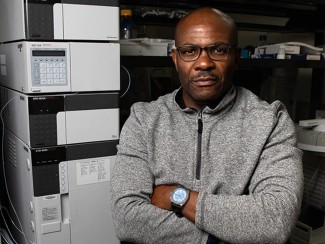
“Using CRISPRtOE, we can kick bacterial gene expression up a notch, allowing cells to put their best foot forward in support of the bioeconomy,” said Jason Peters, an associate professor of Medical Genetics and co-investigator with the Great Lakes Bioenergy Research Center whose lab developed the tool.
CRISPR (clustered regulatory interspaced short palindromic repeats) has revolutionized the study of genetics, advancing medical, industrial, and basic research, allowing scientists to modify gene functions by selectively altering sequences of DNA.
CRISPRtOE is the latest CRISPR-based tool developed by the Peters lab.
Last year Peters and Research Scientist Amy Banta patented Mobile-CRISPRi, a gene-suppression tool that can be used in diverse bacteria to look for genes that help the microbes resist antibiotics or chemical stressors involved with biofuel production.
CRISPR has also been adapted for boosting gene activity (overexpression), which can reveal gene functions that might not show up in other tests and copy natural ways that organisms respond to disease.
Scientists have used CRISPR activation to identify genes that affect how mammalian cells respond to an anti-cancer drug and genes that help yeast resist chemical stressors involved with biofuel production. But CRISPR activation doesn’t work quite the same way in bacteria, which have different mechanisms for turning on genes, and the alternatives were limited and cumbersome.
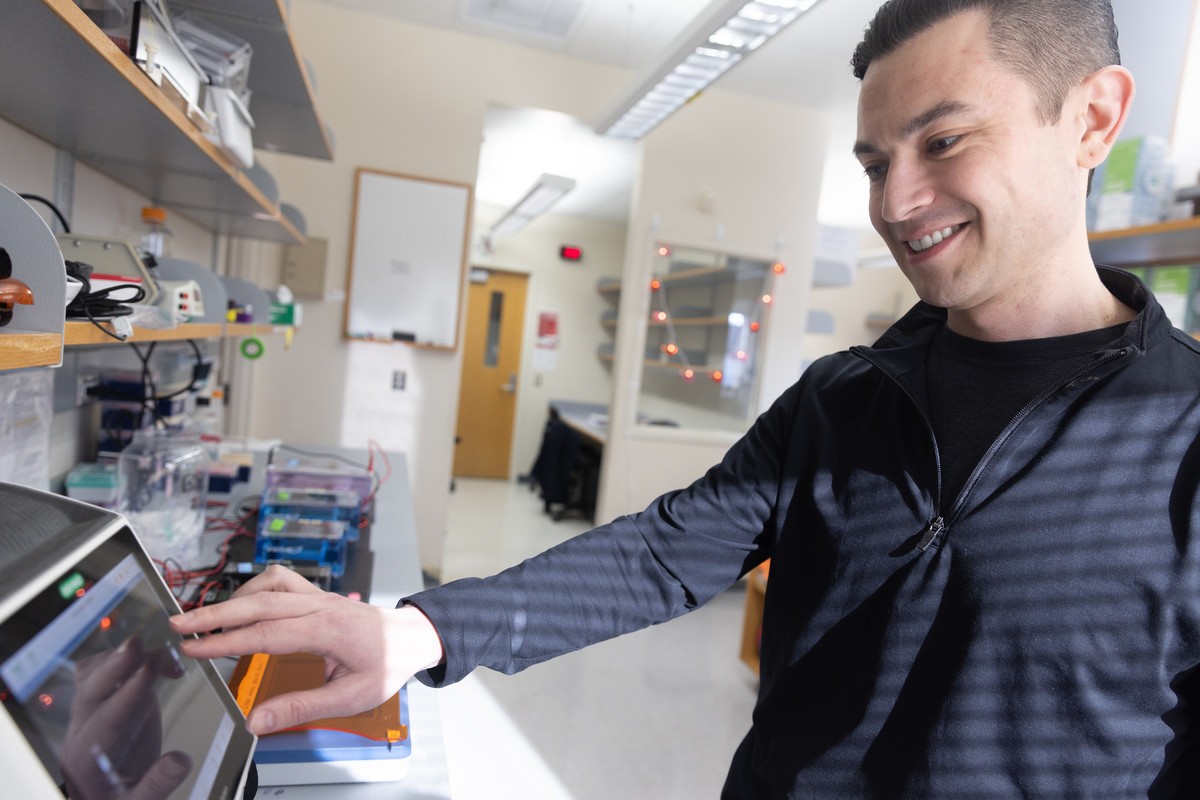
Peters, who studies the functions of genes with medical, industrial, and environmental relevance, set out to develop an overexpression tool that would be accurate, tuneable, and easy to use.
“We wanted an overexpression tool that would be useful in many contexts, whether that be identifying potential therapeutic or engineering targets, or simply learning more about the fascinating biology of bacteria,” Peters said.
The researchers began by modifying a system for targeted insertion of genetic material into bacterial DNA and then used it to insert promoters, sequences of genes that increase the activity of nearby genes — which in most cases means producing more of certain proteins.
They tested the tool, which they called CRISPR Transposition and OverExpression (CRISPRtOE), in Escherichia coli K-12, a non-pathogenic model organism used to study fundamental biological processes, and Zymomonas mobilis, a microbe that’s good at making biofuels but less well understood.
In one experiment, they used CRISPRtOE to identify genes involved in resistance to the antibiotic trimethoprim (TMP) by creating a library of E. coli strains, each with different genes overexpressed and growing them around TMP. By analyzing the strains that survived they were able to identify genes that help with TMP resistance.
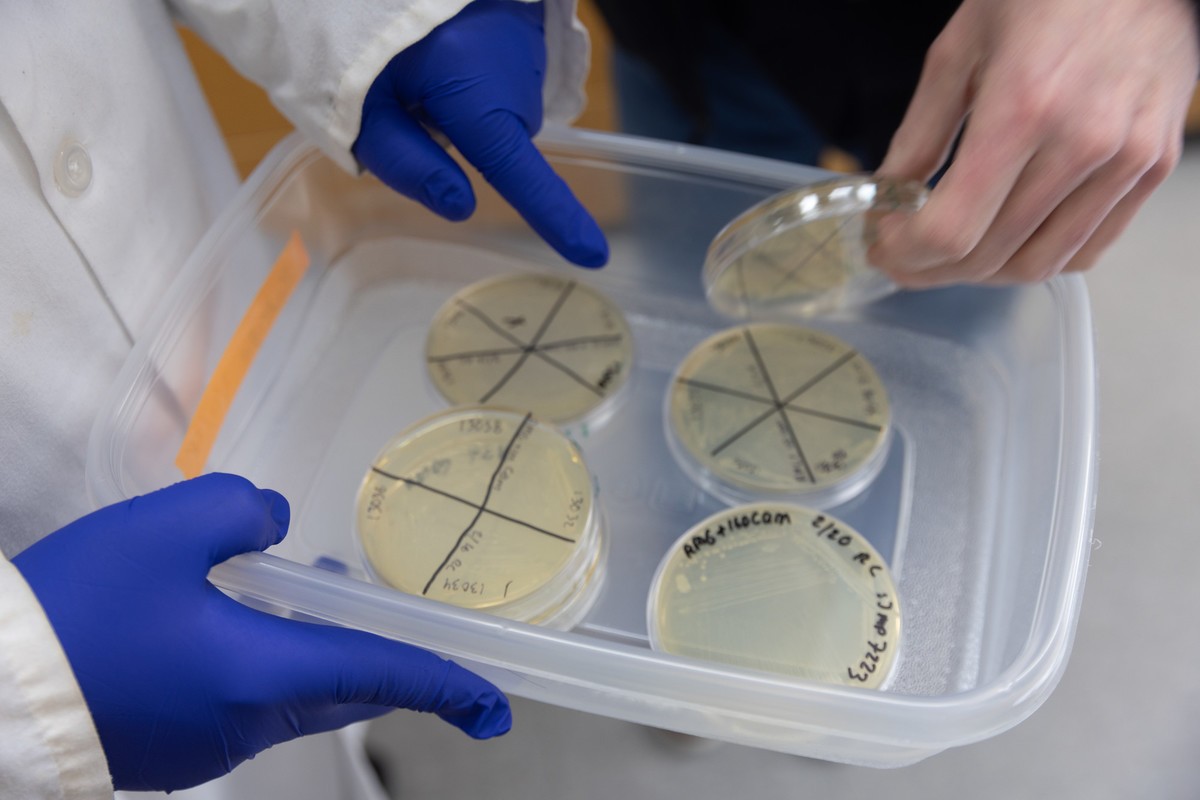
In another experiment, researchers tested libraries of Z. mobilis variants in a solution of broken down switchgrass, a potential biofuel feedstock. These solutions often contain chemicals — introduced by the deconstruction process or present in the plant itself — that slow bacterial growth and limit biofuel yields.
That study revealed multiple genes that improved the microbe’s growth in switchgrass solution.
The results are described in a paper published in the journal mBio. Peters and Banta have applied to patent the technology through the Wisconsin Alumni Research Foundation, which is seeking commercial partners to develop a product.
Peters anticipates CRISPRtOE can be readily applied to other microbes and screening conditions. Such scalable approaches that can be adapted to diverse bacteria are needed to bridge what Peters calls “the yawning gap between genome sequencing and gene function assessment.”
“That CRISPRtOE can target all genes in a bacterium means we can understand the cellular roles of ‘quiet’ genes that are normally turned off,” Peters said. “The ever expanding world of bacterial genetics will always keep us on our toes!”