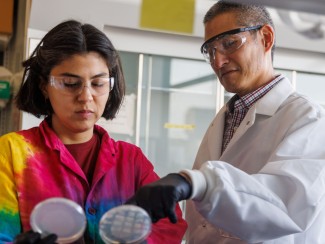
A team of researchers including current and former Wisconsin Energy Institute affiliates has been honored for their efforts to engineer soybeans that produce an eco-friendly dye and a brain-boosting compound.
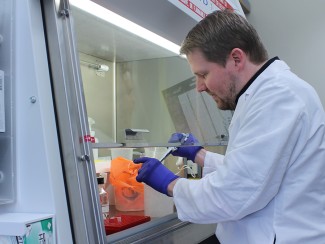
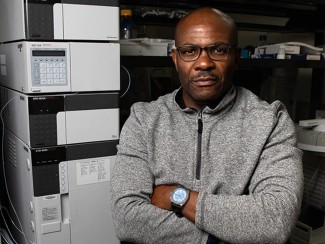
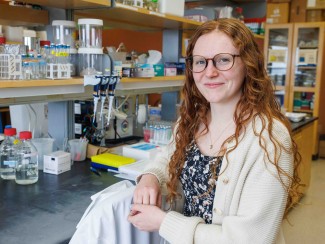
The Wisconsin Alumni Research Foundation (WARF) awarded the 2025 WARF Innovation Award to UW–Madison professor Hiroshi Maeda; graduate student Soyoung Jung; Ray Collier from the Wisconsin Crop Innovation Center; and plant and agroecosystem scientists Shawn Kaeppler and Heidi Kaeppler for their work, Soybeans engineered for color and brain health.
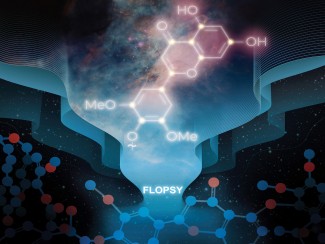
The team developed soybeans that produce high levels of betalain, a natural red pigment found in beets and some cactus fruit. This sustainable coloring could replace synthetic food dyes, which pose health and environmental risks. The soybeans also accumulate L-DOPA, a compound used in brain health supplements, raising the possibility of soy-based food products that are both colorful and beneficial to cognitive function.
The Innovation Award is the highest honor given by the university's technology commercialization partner.
Maeda, a professor of botany, joined WEI and the Great Lakes Bioenergy Research Center last year. His lab combines biochemistry, molecular biology, genetics, analytical chemistry, and synthetic biology, to study how plants regulate the conversion of carbon dioxide into chemicals and ways to enhance the production of beneficial compounds.
A co-investigator during the GLBRC's first 10 years, Shawn Kaeppler continues to support the center's efforts with plant transformation at the Wisconsin Crop Innovation Center. Heidi Kaeppler is an expert on crop genomics.