UW–Madison spinoff CeleramAb uses mass spectrometry technique developed for bioenergy research to speed production of monoclonal antibody treatments
Technology developed to speed up bioenergy research at the University of Wisconsin–Madison is now helping advance the development of life-saving medicines.
Launched in 2024 by two UW–Madison professors, CeleramAb provides drug makers with toolkits that perform critical measurements in a fraction of the time it would normally take.
“We basically are providing a full solution for pharmaceutical companies to adopt this method in their own labs,” said CeleramAb co-founder Josh Coon, a professor of bioanalytical chemistry, mass spectrometry, and proteomics.
Coon says the platform – based on technology developed through the Great Lakes Bioenergy Research Center in the Wisconsin Energy Institute – will be up to 100 times faster, speeding up quality control testing and lowering costs.
GLBRC Director Tim Donohue said Coon “exemplifies how academic research can catalyze industrial innovation, fuel entrepreneurship, and generate societal benefit.”
“Professor Coon’s impact extends beyond the laboratory,” Donohue said. “He has emerged as a highly effective entrepreneur, capable of identifying translational opportunities and executing on them.”
Coon, who was recently awarded a Vilas Distinguished Professorship and holds a dual appointment at the Morgridge Institute, specializes in mass spectrometry, a technology used to measure the thousands of molecules inside a cell — proteins, lipids, and metabolites, substances like amino acids and sugars produced and consumed during the chemical reactions that keep the organism alive.
A mass spectrometer can measure the mass of a mixture of proteins, each of which has a unique weight.
“From those masses, we can figure out which protein is there and how much,” Coon said. “We’re basically weighing these molecules.”
Though his research has primarily focused on health-related applications, Coon joined GLBRC in 2012 to collaborate with scientists who are working to advance production of sustainable fuels and chemicals from non-food plants grown on lands unsuitable for food.
“It was an easy pivot,” Coon said. “The tools were by and large the same, just applying them a little bit differently… I think it's been a win-win.”
One of the keys to GLBRC’s mission is rewiring microbes so that they can digest the mix of sugars and other molecules in woody biomass and turn them into high-value products like jet fuel and chemicals used to make plastics.
“If you want to engineer the organism to do what you want it to do, you have to know what those molecules are doing and which ones are interacting with which other ones, how their abundances are changing,” Coon said. “All of that data can then be used to feed mathematical models that can help us tweak and push the organism to do what we want it to do.”
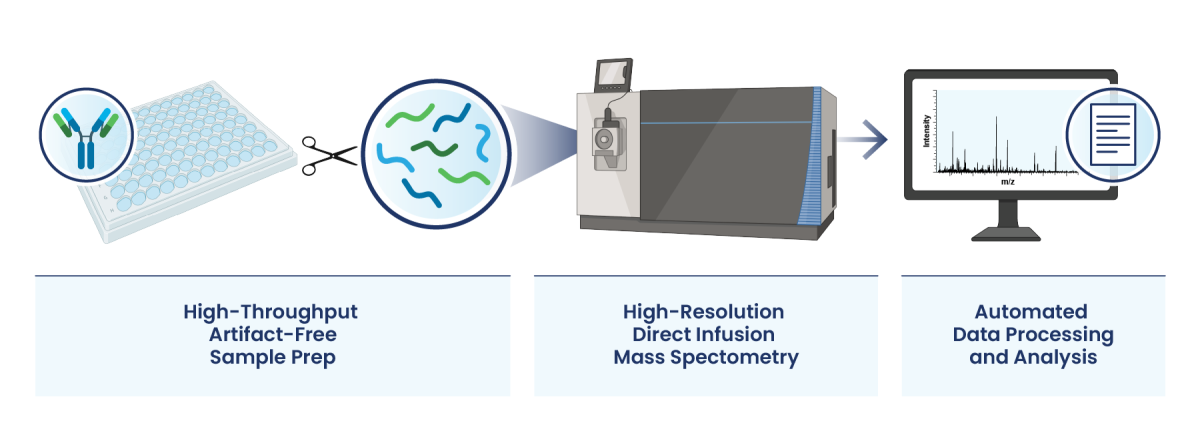
Researchers typically use a process called liquid chromatography to separate mixtures before putting the samples into the mass spectrometer. But altering a microbe’s metabolism requires lots of protein measurements, making the traditional approach impractical.
Working with GLBRC co-investigator Daniel Amador-Noguez, whose research involves engineering strains of the bacterium Zymomonas mobilis to produce energy-dense molecules called terpenoids, Coon came up with a way to skip the separation step and measure pieces of proteins called peptides with a “shotgun proteomics” approach.
“It only took a couple minutes instead of, like, an hour for a sample,” Coon said.
Later, Coon learned about monoclonal antibodies (or mAbs), lab-grown proteins that mimic the immune system’s ability to target threats.
Used to treat cancer, autoimmune disorders, and infectious diseases, these monoclonal antibody drugs — typically with names ending in “mAb”, common ones are Humira (adalimumab) and Keytruda (pembrolizumab) — come with far fewer side effects than traditional treatments like chemotherapy and are considered one of the most transformative and promising areas of medicine.
But these protein molecules are fragile, so drug makers need to test them throughout the manufacturing process to ensure they haven’t degraded.
Coon decided to test his direct mass spectrometry technique on antibodies.
“It turns out it worked pretty well,” Coon said. “Within a minute we can characterize an antibody drug that would normally take a pharma company an hour and a half.”
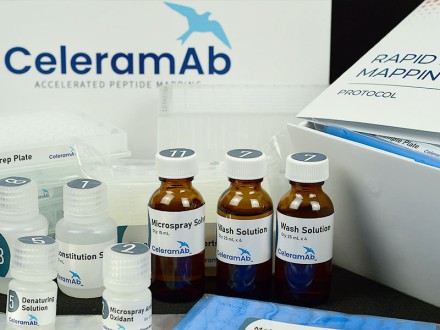
Coon partnered with UW–Madison chemistry professor Lloyd Smith to commercialize the peptide mapping technology, which is described in a paper on the preprint server BioRxiv. In 2024 Coon and Smith founded CeleramAb, which sells reagents, kits, and software to analyze the data.
The product has been field-tested by some of the world’s top drug companies, including AbbVie, Genentech, Eli Lilly and Johnson & Johnson.
Coon said drug companies run millions of these tests every year, and the demand is even higher. With the kits, companies can plug samples directly into mass spectrometry machines and get the same results without liquid chromatography.
“Most all of the people we talk to in pharma are in a position where their biochemists want more capacity, and the analytical teams that we are trying to help and support are having to triage,” Coon says. “They have to pick and choose because they don't have the bandwidth.”
“Once they get familiar and comfortable with our process, we anticipate even more of these experiments being done,” he adds. “That's going to not just save the company money, but it's going to accelerate their ability to move drugs through the pipeline. That’s going to help everybody.”
Though Coon holds some two dozen patents, advises device makers, and has an ongoing partnership with Thermo Fisher Scientific to develop next-generation instrumentation, CeleramAb is his first foray into entrepreneurship.
The project has received support from the Draper Technology Innovation Fund as well as UW–Madison’s Discovery to Product (D2P) and bridge fund commitments from Morgridge.
“Bootstrapping allows us to remain highly agile and strictly focused on our customers' needs rather than capital demands,” Smith said. “We operate incredibly lean, which has allowed us to rapidly iterate our technology alongside our top pharma partners and build a highly scalable commercial platform.”
Donohue said CeleramAb’s early success shows that academic research can catalyze industrial innovation, fuel entrepreneurship, and benefit society.
“CeleramAb directly embodies the Wisconsin Idea,” he said. “It commercializes UW–Madison research, fosters local entrepreneurship, and boosts the Wisconsin economy all while accelerating drug development.”