Breaking bonds for better biofuels
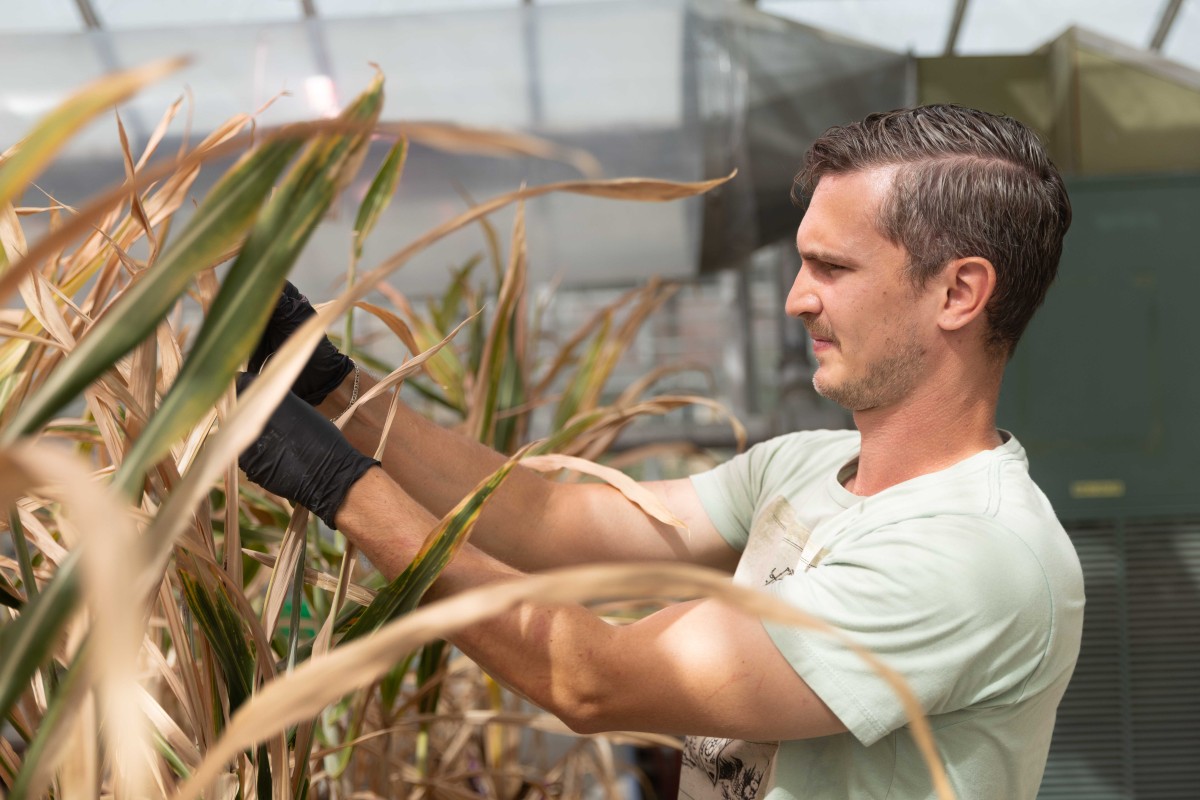
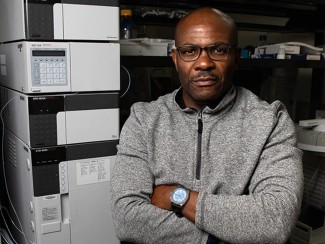
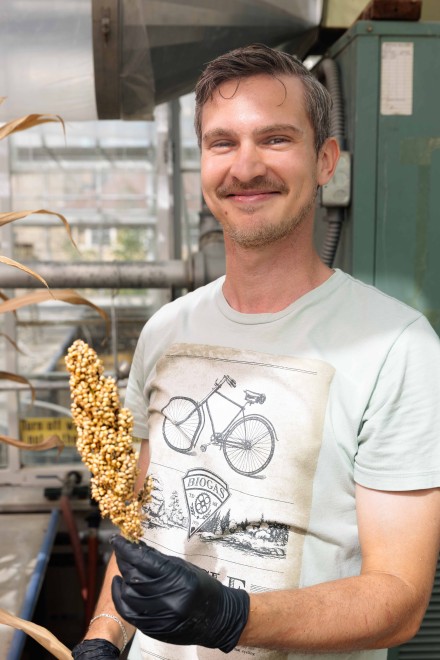
Samuel Chagas is a postdoctoral researcher in Rebecca Smith’s lab, where he studies the composition of plant cell walls in sorghum and corn to develop crops that are easier to digest, whether for biofuel or animal feed.
What is the focus of your research?
The big aim is to improve biomass digestibility. We try to do that by changing the composition of the plant cell wall. The plant cell wall has three major components: cellulose, hemicellulose, and lignin. They are very well connected, so it's hard to access each of them and to break the bonds between them, mainly between lignin and hemicellulose. In the cellulose portion, we have many sugars protected by lignin. We can use those sugars to produce biofuels — for example, ethanol or jet fuel. So the big aim of our lab is to change lignin composition and cross-links, break the bonds between lignin and other components, and access those sugars more efficiently to produce biofuels.
What did your educational path look like?
My bachelor's is in environmental science. During that time, I was in a program called Scientific Initiation, which was my first exposure to research. At that time, I was very curious about a river called Mumbuca, which flows through my childhood city, Monte Carmelo, in Brazil. When I was growing up, I always heard that the water was really poor. In college, I had the chance to investigate the water. We conducted experiments and ran mathematical modeling to assess the river's level of contamination. That was my first contact. After that, I went to a master's in biofuels, and I was like, okay, this is what I want to do. I really like the biofuels field.
What about biofuels appealed to you?
I was really interested in chemistry, which is important in the biofuels field. I think I was just interested in changing how we do things right now. And for me, biofuels were like, Oh, this is really new and super cool. We can use plants for different fuels, from cars to airplanes.
During my master’s program, I worked with bio-kerosene. We were trying to produce biofuels to replace jet fuel. I used coconuts from a plant called Gueiroba in my childhood city to produce bio-kerosene. For my PhD, I was working on plant biotechnology. It was also for biofuels, but in a different field focused on second-generation ethanol production. We were trying to modify sugarcane by altering some genes, and at the end of the process, we tested the resulting plants for biofuel production. That’s how I got here. One of the goals of my PhD project was to improve biomass digestibility. So it's very similar to the scope of the Smith lab in GLBRC.
What does improving plants look like on a day to day basis?
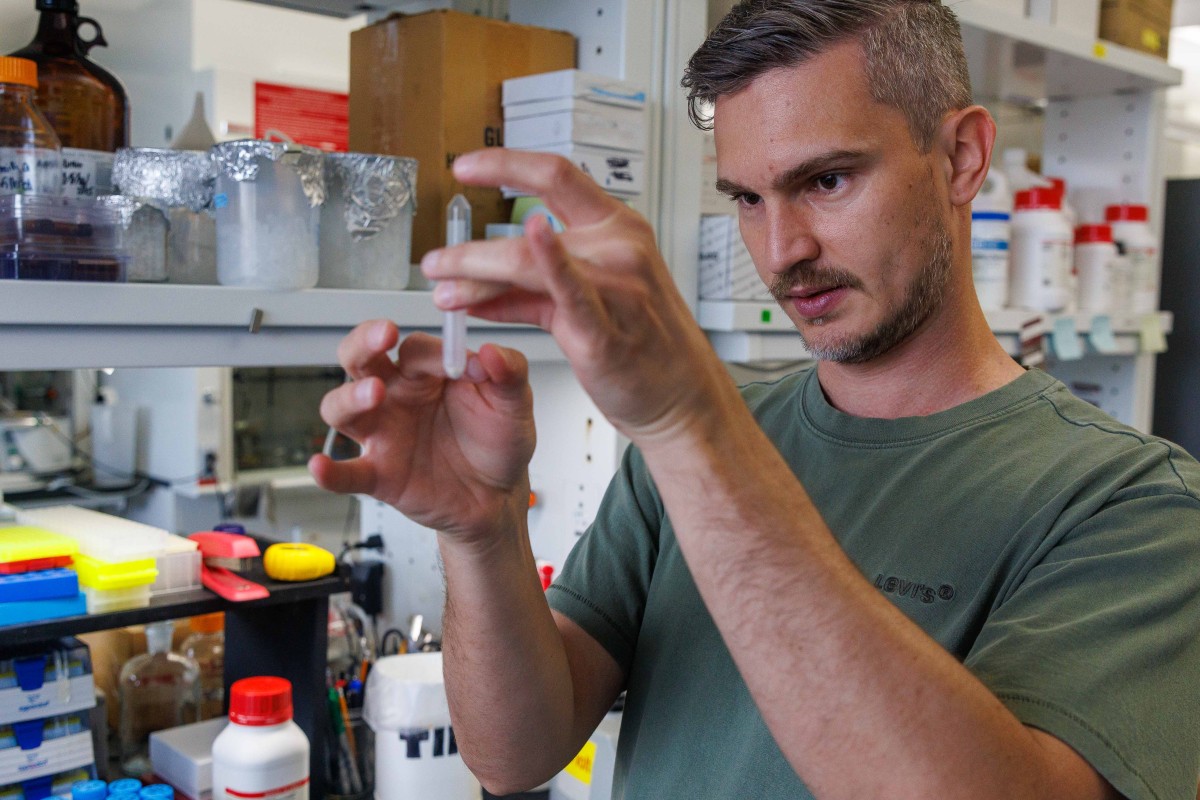
Every day is completely different. Sometimes you plan something, and then you have to do another activity because you need to prioritize experiments. Normally, the pipeline starts with planning which gene we want to change, by increasing or reducing its activity. To do that, we need to know what this gene can do in the plant and where it can impact. So we use a lot of literature and bioinformatics tools in that stage. We have many databases to study genes and pathways, which help us plan. After selecting the gene and actually transforming the plant, we grow them and analyze their biomass in the lab. We use various molecular and chemical methods to investigate gene expression, digestibility, lignin content, and composition, and to evaluate whether the changes we make have any negative effects.
How do you actually change the plant genes?
We are not doing the transformation here — we use the Wisconsin Crop Innovation Center — but I did it during my PhD. There are lots of methods, a common one is to transfer the vector containing the genes to a bacteria called Agrobacterium, and then the bacteria infects the plant callus, which are unorganized, undifferentiated cells, and transfers the vector to the plant. In that transfer, we can insert the gene we want to express into the plant's genome. After that, we have to grow the plants, then we start genotyping to check whether the gene is really there, whether it's working, and the expression levels of the genes. Sometimes we overexpress, which means trying to increase expression, or we do silencing or knockout, which involves blocking gene activity. Once we have ensured that the gene is present and functional or non-functional, we begin chemical analyses to assess lignin composition and digestibility. We also try fermentation to see if you can produce more ethanol and methods to deconstruct lignin.
What's your favorite part of your job?
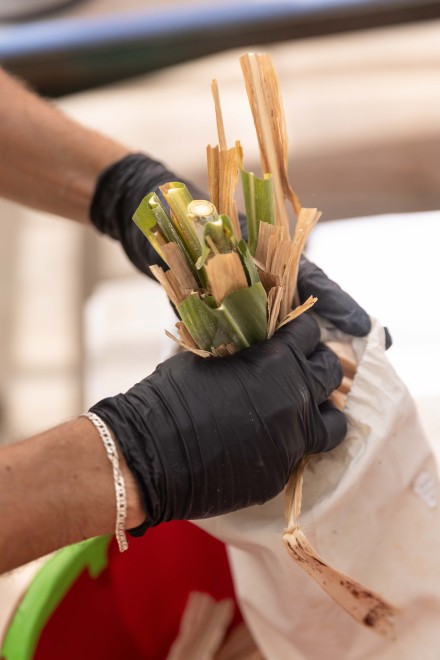
I’m very curious. I really like trying different things, for example, different methods for experiments to see the results and get some insights from them. I really like testing everything to see what we can do with our plants, and I think it's interesting that we can change them to do what we want.
What do you like to do outside of work?
I play soccer. I’ve played since I was five or six. In Brazil, I played on three or four different teams in futsal [5-on-5 indoor football] or on the field. Here I’m playing turf, 7-on-7, and 11-on-11. It's really nice to make friends and to meet new people.
Do you have a team that you root for?
I support Athletico Mineiro, which is a Brazilian team. We are not so good right now.
What advice do you have for somebody who wants to be a researcher?
Be curious and be persistent. We often try the same experiments two, three, or four times. We need to be really resilient. You don't have to give up on the first try, because it's not uncommon to have to repeat things. It's really rewarding to see that your research can impact people.