Studying battery behavior to enable second life
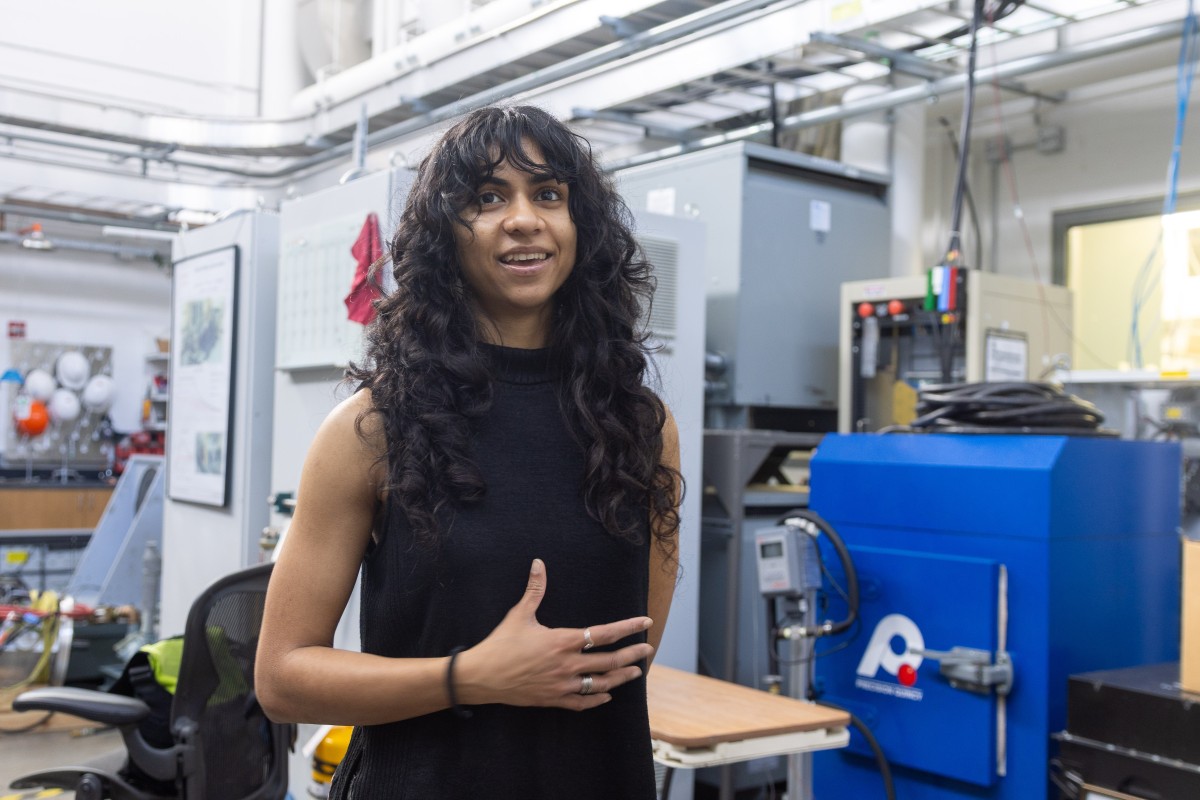
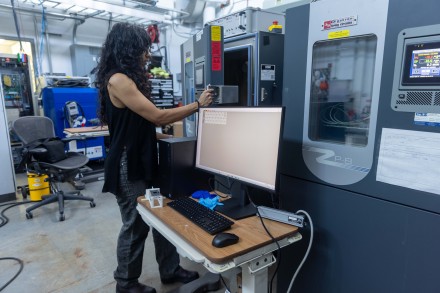
Sahana Upadhya is a graduate researcher working on her PhD in Mike Wagner’s lab, where she studies how lithium ion batteries behave and degrade with the goal of optimizing use on the power grid.
What’s the focus of your research?
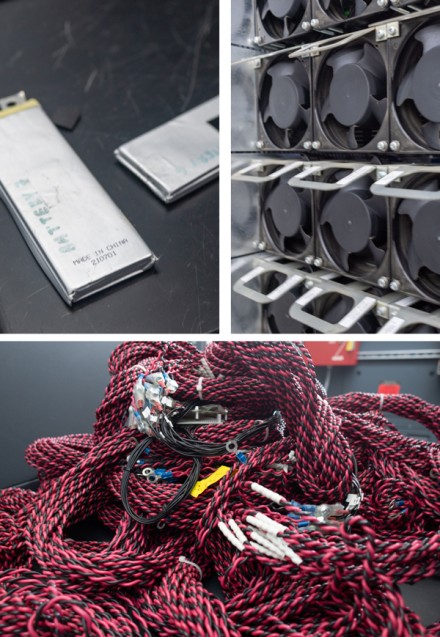
My research is in lithium ion battery analysis, specifically for cell degradation and modeling battery behavior. At the Wisconsin Energy of Institute I have a lab set up that allows me to connect a lot of lithium ion cells. I place them in a thermal chamber and cycle them based on a cycling schedule. Then I'm able to analyze this data and see how the battery behaves over time and hopefully from that be able to develop models that'll be able to predict battery behavior. Our goal is to be able to apply it in grid applications.
Could you tell me more about the scalability of grid applications and how it connects to bioenergy?
I’m focused on second-life applications of batteries. Retired electric vehicle batteries that can't be used for electric vehicle applications still have the potential to be used. Grid applications are a good use for these batteries because we don't really care about the weight; we just want the energy. I believe that it definitely has the potential to be scaled up for larger applications, but it's still in its infancy.
Walk me through your day-to-day at the solar energy lab.
It really depends on the research phase. For example, my masters was purely modeling work. Once I started my PhD, I wanted a little bit more lab work to actually test batteries and have my own set of data. There was more dividing my time into collecting data and analyzing data. There was also a lot of breaking my head against equipment I didn't know how to use, and a lot of troubleshooting. Now, since I'm focusing only on the modeling aspect again, it's mostly working on coding all day.
Were there any other obstacles that you had to overcome to get where you are right now?
If there is one big take away from the PhD, I think it is learning to constantly deal with problems. I had to learn Python and learn how to code. That was one of the first obstacles. The second was the equipment. The people who used the equipment I inherited from WEI left the university years ago, so there was nobody left on campus who knew how to use it. It's pretty expensive, fancy equipment, which I had to be very careful using. That was a big hurdle. I think it's a constant: bump, overcome it, bump, overcome it. This aspect of the PhD translates to your general life too, learning to not to allow anything to completely overcome you, and to have a level head while handling obstacles in life.
What's something that you’re passionate about outside of work?
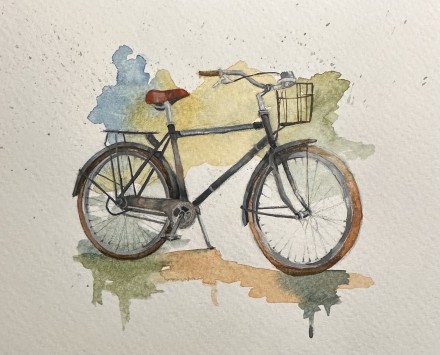
There are a million things. I learn and practice Indian classical music every day. I used to perform a lot in India, but here I have performed a little bit — like at Indian events at UW-Madison and the temple in Madison. I also do western pop and rock on open mics here sometimes. There was a phase when I used to go to Memorial Union every week for open mic. I like to exercise a lot. I do an hour of jump roping every day. I have a lot of plants. I am into arts and crafts, I paint a lot. I have a macrame project going on right now for my potholder. I like to keep my brain active.
What about your work just brings you the most joy?
That varies on a day-to-day basis. When I can brainstorm different avenues to go down and I have lots of brilliant ideas and ways of tackling the problems, that's really exciting to begin with. The next most satisfying point is when I have been struggling with something for months and months and then I finally overcome it. That gratification feels really good. Also, thankfully with engineering, there's a lot more tie-ins with practical applications. That is very satisfying for me because it's very easy in research these days to lose sight of where your research is contributing. Knowing that my research will be used in a real situation feels really good.
What advice do you have for future researchers?
Research in general has this tendency, at least in academics, to isolate you because you're the only one working on your topic to that degree of detail. Even your advisors don't know your topic as well as you know it. But the more I talk to everybody, it's like everyone is going through these things together. As long as you keep working, you keep making progress. It's like Finding Nemo — just keep swimming. As long as you keep doing that, you will move forward and not allow yourself to get too bogged down by the obstacle. At the end of the day, if your mind isn't happy, what else matters?