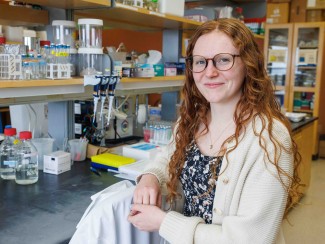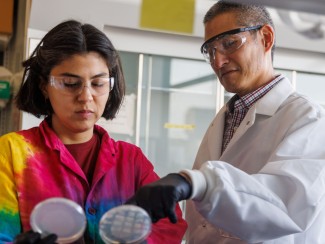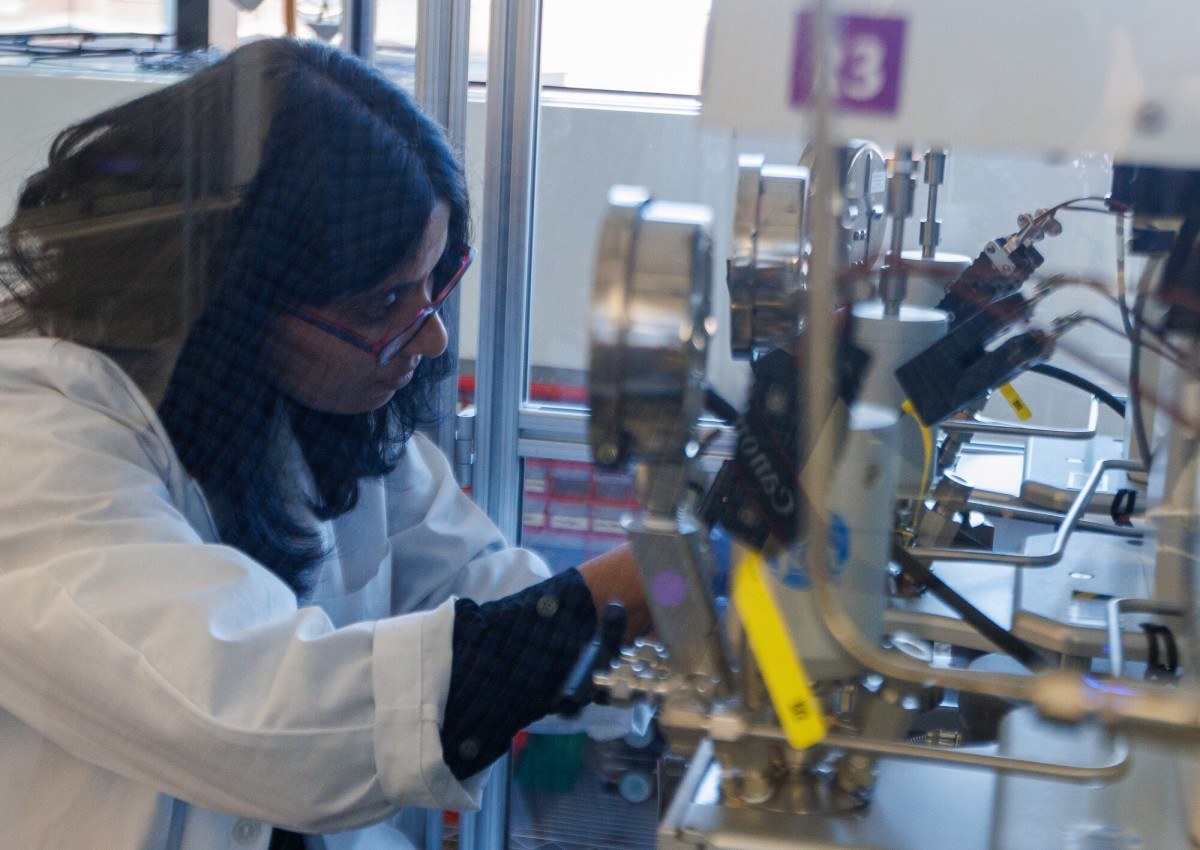
Sarada Sripada is a postdoctoral researcher working in the Sener lab. She studies reductive catalytic fractionation (RCF) with the goal of deconstructing lignin, the woody part of plant cells, into smaller molecules that microbes can convert into valuable products such as PDC, a chemical that can be used to make bioplastics.
What’s the focus of your research?
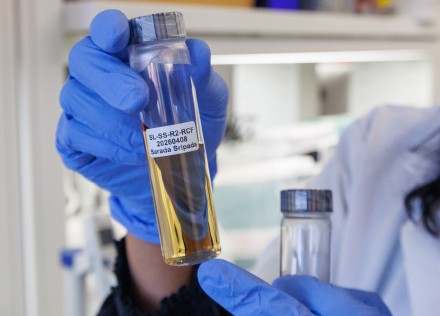
I work on valorizing the lignin fraction of biomass. Lignin is often treated as a byproduct and is usually burned for energy, but it can be used to produce high value bioproducts through chemical and biological processes. One focus of my research is addressing some of the challenges associated with the reductive catalytic fractionation process. The choice of solvent is especially important because it affects reactor pressure, process safety, economics, and compatibility with downstream biological processing. In a recent paper, we showed how the right solvent system can improve RCF product yields while lowering reactor pressure and overall process costs. I’m interested in the chemistry behind these reactions and how lignin breaks down during the process. I also contribute to inter-Bioenergy Research Center projects where we study how environmental stresses and differences in feedstock properties can affect the conversion of biomass into fuels and bioproducts.
What are your hopes for your research?
Through collaboration with other teams at our center, we combined our experimental work with computational modeling to better understand the chemistry behind these processes and with techno-economic analysis and life cycle assessment to evaluate the economics and sustainability. If we treat RCF as an isolated operation, we might miss the bigger picture. At the end of the day, we're thinking in terms of an integrated biorefinery. How do all of these technologies fit together so we can efficiently convert biomass into our target chemical or fuel? My hope is to develop processes that are not only efficient, but also economically viable and environmentally sustainable.
How did you get interested in biofuel?
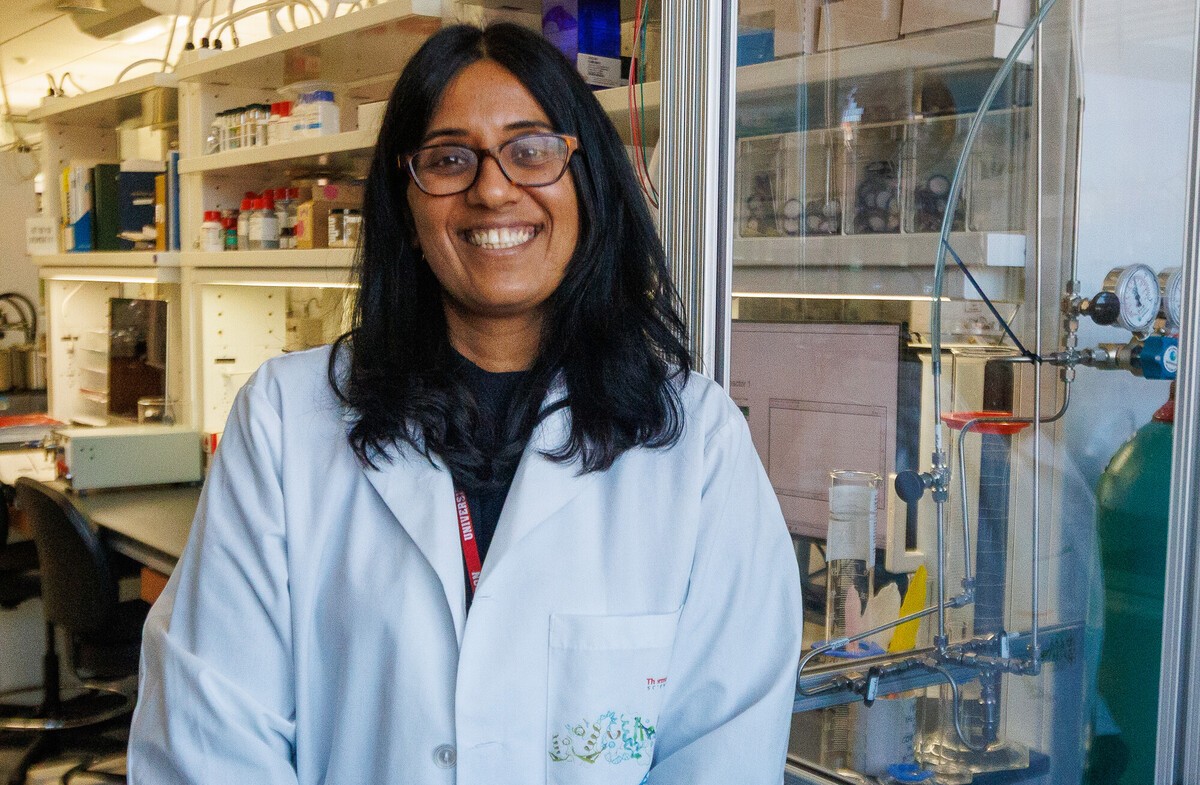
My undergraduate and master’s degrees are both in biotechnology from universities in India. One of the projects I worked on as an undergraduate focused on producing biodiesel from non-edible plants, and that really got me excited about biofuel research. After my masters, I worked at the Indian Institute of Chemical Technology, where I studied biocatalysts and their applications in detergents and nutraceuticals. I think all of these experiences fueled my interest in sustainable bioproducts and biofuels, which led me to pursue a doctoral degree at the University of Georgia. There, I worked on developing catalysts from forestry resources for applications in specialty chemicals, pharmaceuticals, and aviation fuels. I was also following research by my current advisor, Canan Sener, which eventually led me to my position here.
What’s your favorite thing about your job?
One thing I really enjoy — and I think this is one of the best parts of being in a center like the GLBRC — is the interdisciplinary research environment. I didn't fully appreciate this earlier in my academic career, but being able to collaborate with researchers working on microbial fermentation, systems engineering, and computational modeling is incredible. Sitting at the same table with people who bring different perspectives and are all trying to find solutions to a common problem is something you don't get everywhere.
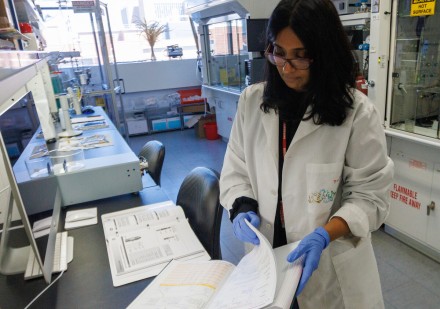
I've also had the chance to mentor graduate and undergraduate students through the Research Experience for Undergraduates program over the last two years, and I’ve found that experience very rewarding.
Aside from the community, what motivates you to do research?
Being able to develop bio-based solutions that can replace some of the petrochemical products we rely on every day really motivates me. What really inspires me is the possibility that biorefineries could help reduce our reliance on petroleum.
What do you like to do when you’re not at work?
I really enjoy painting and arts and crafts in general. I especially enjoy diamond painting because you work with templates and place tiny beads to slowly build an image. It takes a lot of focus, but I actually find it really relaxing. During my PhD, arts and crafts became a great way for me to unwind after long days in the lab.

Is there any advice you would give to somebody who wants to do what you do?
I think it's very important to build your fundamentals early on, develop critical thinking skills, and learn how to analyze your data carefully. That is something I learned over time, especially during graduate school, and it is still very helpful. The second thing is to reach out to your mentors, supervisors, and collaborators. There is usually someone who has dealt with a similar problem or can help you think through it.
I would also say it's okay to pivot and explore different areas of research. A lot of the work I did earlier on was related to microbial fermentation and biocatalysts. Later I became more involved in chemical catalysis and reaction engineering. Back then, I never realized that you could integrate chemical and biological catalysis. I wouldn't say mine was a straightforward chemical engineering path, but I just went with the flow, and I'm very happy with where I am today.