Engineering team won the project development contest
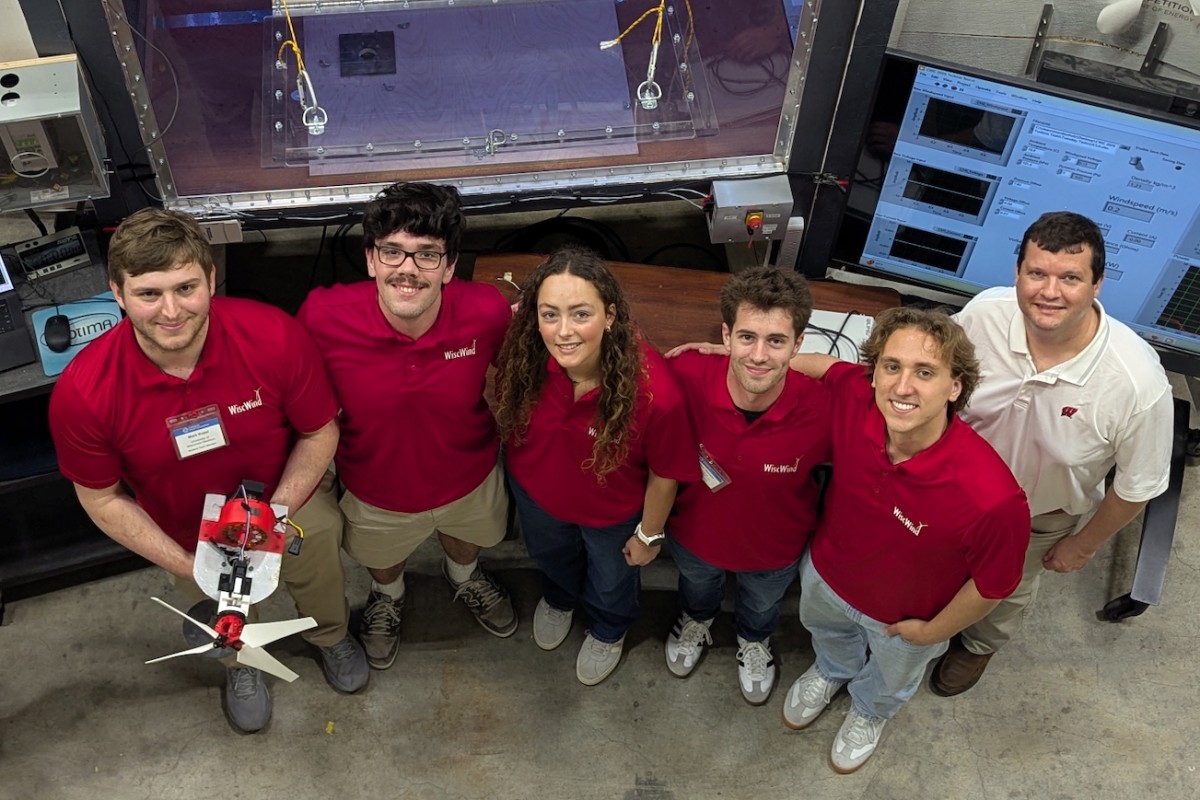
A team of students from the University of Wisconsin–Madison won second place in the 2026 Collegiate Wind Competition and took first in the project development portion of the contest.
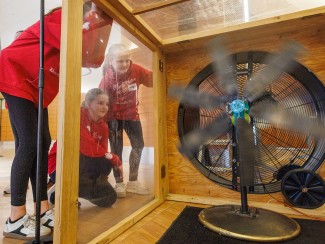
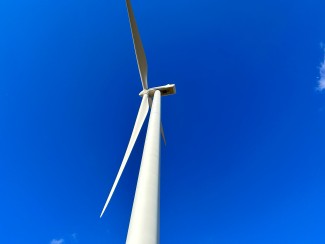
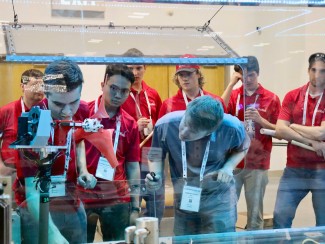
Students on the WiscWind team presented plans to panels of industry judges and tested their turbine in a wind tunnel last week during a three-day western regional competition at Cal Poly Maritime Academy in Vallejo, California.
While the project development and engagement plan was a team effort, junior environmental engineering major Ben Hein was the only one available to present it to the judges. WiscWind faculty advisor Scott Williams said Hein "knocked the presentation out of the park."
"It was all him," said team leader Mark Kruzel. "I'm very, very, very grateful to have him on the team."
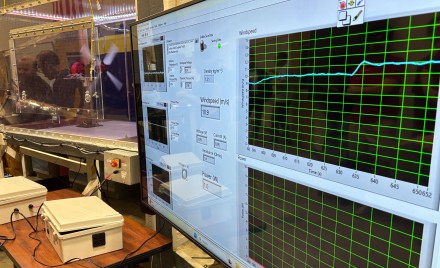
Things didn't go as quite as well in the wind tunnel.
"We were having some major problems with our turbine generator and electrical system," Williams said. "But the team stuck with it and worked hard to diagnose the issues."
They made some on-the-fly modifications to generate enough power to still score points in the final test.
"There's definitely a lot of things that went well, a lot of things to improve on," Kuzel said.
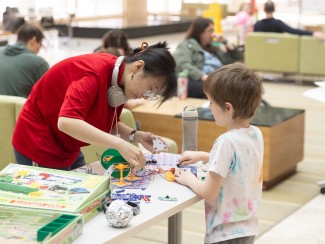
Launched in 2014, the annual competition helps college students prepare for careers by engineering working model turbines and developing plans for a hypothetical wind farm.
The WiscWind team, founded in 2016, participated but didn't place in the 2025 competition. The team won the project development contest in 2024 with a proposal for a 525-megawatt offshore wind farm on Lake Michigan.
Kuzel said the competition is stiff but collegial.
"You get to go there and interact with a lot of smart people. And everyone's very open about sharing what they did with their turbine," Kuzel said. "We all want to win, but it's just another great learning environment."
Kuzel, a mechanical engineering major competing for the fourth time, said being part of the WiscWind team was a great experience, providing hands-on experience as well as lessons in teamwork.
"The range, from being a freshman, doing what I'm told to making decisions and telling people what to do has been has been incredibly valuable," he said. "Seeing what works, what doesn't... Whenever you make a mistake — better here than when you're working on a product for a company and there's money on the line."