
Forward in Energy Forum
In the two decades since its formation, the Wisconsin Energy Institute has brought together researchers from across campus to collaboratively tackle some of the world's biggest challenges. Join us on Tuesday, Dec. 1 as current and former UW–Madison leaders discuss how WEI has become a model for interdisciplinary research and share their visions for the next generation of groundbreaking energy research.
Light refreshments will be provided.
The University of Wisconsin-Madison is a barrier free campus and is committed to providing equal opportunity for participation in all programs, services, and activities. If you need an accommodation for this event please let us know by emailing outreach@energy.wisc.edu or calling 608-890-0946. Requests made with less than 3 weeks’ notice will be honored when possible.
Speakers
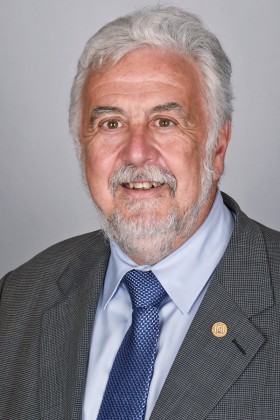 Timothy Donohue
Director of Wisconsin Energy Institute and Great Lakes Bioenergy Research Center, UW Foundation Fetzer-Bascom Professor
Wisconsin Energy Institute Director Tim Donohue is UW Foundation Chairman Fetzer-Bascom Professor of Bacteriology at the University of Wisconsin–Madison. Donohue is an internationally recognized expert on bio-based conversion of renewable resources into valuable products. He is a former president and current secretary of the American Society for Microbiology and an honorary fellow of the American Association for the Advancement of Science and the American Academy of Microbiology. Since 2007, Donohue has served as principal investigator and director of the Great Lakes Bioenergy Research Center, a U.S. Department of Energy bioproducts research center based at UW–Madison.
Dorota Grejner-Brzezinska
Vice Chancellor for Research, UW–Madison
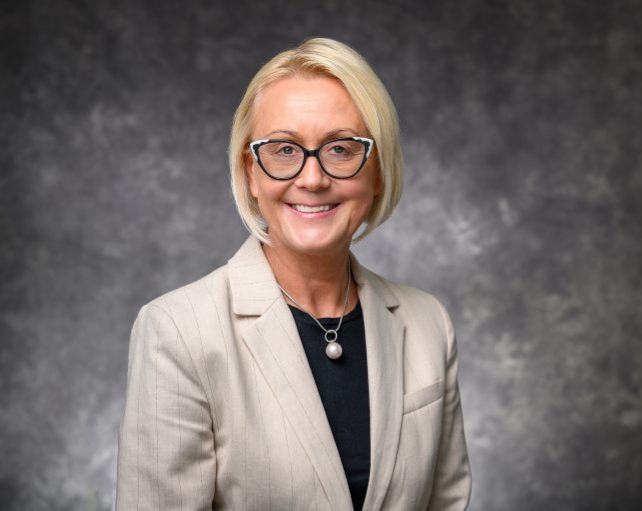
As Vice Chancellor for Research, Dorota Grejner-Brzezinska is responsible for more than $1.73 billion in annual research at UW–Madison, one of the nation’s top 10 research universities. Her office oversees administration of 20 cross-campus offices and research centers. Also a professor in the Department of Electrical and Computer Engineering, Gjejner-Brzezinska researches the Global Positioning System (GPS) and the Global Navigation Satellite System (GNSS) high-accuracy algorithms, multi-sensor integration for assured navigation in GNSS-challenged environments, sensors, and algorithms for indoor and personal navigation, image-based navigation using Artificial Intelligence. She is a member of the National Academy of Engineering and a fellow of the Institute of Navigation, the Royal Institute of Navigation, and the American Association for the Advancement of Science.
Michael Corradini
Wisconsin Distinguished Professor Emeritus of Nuclear Engineering & Engineering Physics, Former Director of the Wisconsin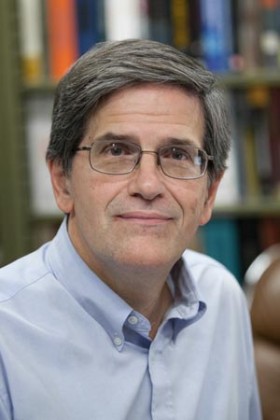 Energy Institute
Mike Corradini, a distinguished professor emeritus in the UW–Madison College of Engineering, is a mechanical and nuclear engineer with research interests centered primarily in thermal hydraulics and multiphase flow. Corradini is widely published in areas related to vapor explosion phenomena, jet spray dynamics, and transport phenomena in multiphase systems. He is the former Director of the Wisconsin Energy Institute, former chair of the Energy Institute Executive committee, and former director of the college's Wisconsin Institute of Nuclear Systems. A member of the National Academy of Engineering, Corradini has served on the U.S. Nuclear Waste Technical Review Board, the Institute of Nuclear POwer Operations national accreditation board, the NRC Advisory Committee on Reactor Safeguards, the National Council on Radiation Protection, and the Scientific Advisory Committee to the French Atomic Energy Agency.
John Duncan Wiley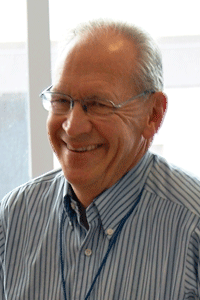
Former UW–Madison Chancellor, Emeritus Director of the Wisconsin Institute for Discovery
Research physicist John Wiley served more than three decades as a professor and administrator at UW–Madison, where he was chancellor from 2001 to 2008. Wiley, who earned his PhD from UW–Madison in 1968, joined the Department of Electrical and Computer Engineering in 1975. His research focused on topics related to semiconductors and other materials and processes important to the electronics field. He co-founded several highly successful research centers, including the Center for X-ray Lithography and the Engineering Research Center for Plasma-Aided Manufacturing. He chaired the Materials Science Program, a graduate-level, interdepartmental-committee program for masters and doctoral degrees, and served as associate dean for research in the College of Engineering, dean of the Graduate School, and the university’s senior research officer as well as provost and vice chancellor for academic affairs.